By Timothy Brantingham
After University, I worked for a Taiwanese ad agency. While I was hired to write English copy, the working language of our office was Mandarin Chinese. Meetings, briefings, beer hall team-building sessions—all done in Chinese. One night, over stir-fried clams, I was telling an old international school classmate of mine, who himself was Indian, of this experience, and explaining how weird it was to have to rely solely on my Chinese language ability to navigate work life. For me, Chinese was a tactical language: words used to explain matter-of-fact things; to get from A to B. I did not know how to be creative in Chinese, nor could I express deep nuanced feelings; it was not an intimate language for me at all. In fact, I told my friend, no one in my office could even judge if my English copy was any good or not; it was a skill that went totally unnoticed and unrecognized… and that was really quite frustrating.
My friend looked up from his plate of clams with an ironic smile and said, “Well, Timothy, that pretty much sums up my whole experience at school… not being American at that place, well, I found it awfully… “. And then he stopped himself.
What? Awfully what? He wouldn’t finish the sentence for me. He smiled and ordered us another round of beers.
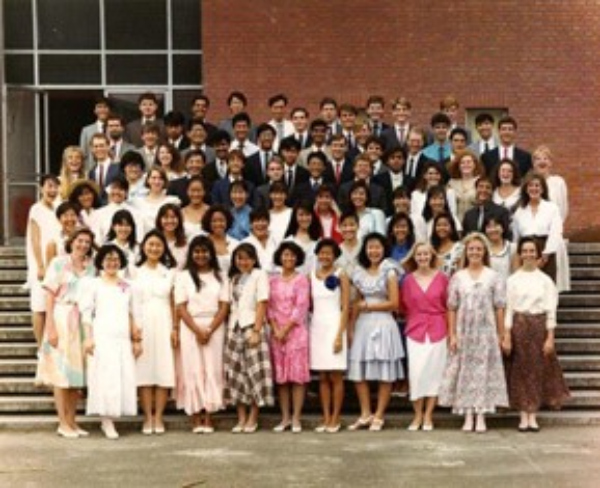
I’ve had a number of conversations like this with classmates who came to international school from non-Western backgrounds: kids whose home language was something other than English, and whose home culture sometimes stood in stark contrast with the culture of the school. These guys were TCKs for sure, but their highs and lows did not align well with mine. While my international school experience was emphatically positive, theirs was, well, something else.
Since my friends choose to remain pretty mum on the subject, I sought out an expert to help me gain some insight. Danau Tanu answered the call. Danau is a half Japanese, half Indonesian researcher living in Perth, who did her PHD thesis on Third Culture Kids, and who wrote a book on the politics of International schools. Danau is a TCK herself who went to international school in Jakarta. Her home language was Japanese and Indonesian; her home culture was anything but Euro-American.
Over a 2-hour Zoom conversation, I shared a few of my “clam-fry conversations” with Danau, and after a long sigh she laid it out for me. It’s like this, she said: most international schools have a kind of silent class system in place. English language primacy at international schools means native speakers of English have a leg up. In other words, if your home language is English, and if your home culture is Western leaning, your standing at these schools is high: tier one. If English is not your first language, such that you miss nuance and cultural cues, or if your home culture does not align well with that of the school’s, your standing will be diminished. And if you are in the ESL program, well, forget it: you almost don’t exist at all. Danau mercifully pointed out that it’s not that these standings are intentionally or explicitly laid out; it’s that they unfold unconsciously: the result of inherited biases, and a school system established to instill fluent English and “cosmopolitan Internationalism” (read: Western values) in its pupils.
To help illustrate the subtleness of it all, Danau told me a story about her favorite English teacher in Jakarta: an American lady who was very kind and supportive of her in general. But one day watching this teacher interact with a group of American expat students, and seeing the ease of their interaction, the naturalness, the intimacy that just seemed to spontaneously combust, it sank in: she would never share that same level of intimacy with this teacher. It’s not that the teacher had any intention of excluding Danau, it’s that there would always be a slight awkwardness gap in their ability to connect on all points. Danau realized some degree of this international school experience would remain forever out of her reach.
And then there are the parallels to my Taiwan advertising experience. Doing schoolwork in your second or third language, feeling like you can’t express yourself deeply. Trying to establish social bonds when you don’t really know the jokes, the bands, or the culture references. Being a great cricket player when your school only has a basketball team. It becomes really frustrating when fellow students and teachers never see you at your soulful best.
These kids often try very hard to take on Euro-Americanness, such that it creates strains at home. Danau tells another story of having an argument with her mother, and mid argument switching from Japanese to English, and using phrases and expressions that her mother could not understand, partly as an act of executing cultural power. Her mother asked her to switch back to Japanese, and Danau remembers giving a sassy reply, to the effect of ‘Hey, English is now my main language, and you had better learn to deal with it.’ Danau’s mother flew into a rage and said, “I would rather have an uneducated child with a good heart than an educated one who lets their education ruin them on the inside.” The dynamics of language, culture and power are so intertwined that even mother-daughter relationships are not exempt from their effect.
The most painful part of listening to Danau’s story is realizing that all those international, culturally competent, bridge building, race blind school administrators and expat TCKs were maybe not as culturally sensitive as they might have thought themselves to be. That’s people like me, self-identifying as a multi-cultural internationalist but still unable to shed pretty ingrained Euro-American brain filters, and still putting people into categories based on subconscious cultural biases. Danau said her Western teachers all professed a love for Indonesia… “I really love the culture,” was a common refrain. But the culture they loved was often a romanticized, Orientalized, hotel lobby décor version of the culture that was not that recognizable to actual Indonesian citizens. Ouch, ouch, and much more ouch.
Not surprisingly, Danau said, this can lead to a resentment of expat culture and expat institutions—a sentiment I certainly felt from my Indian friend. Danau herself had no interest in connecting to her international school until she discovered the literature on Third Culture Kids. While the TCK phenomenon does indeed have expat overtones (which Danau attempts to remedy in her research) she did eventually come to identify as a TCK, and specifically around the story of grief. TCKs from non-Euro-American backgrounds in many ways have a double helping of TCK grief. There was the grief of being on the outside while in school, and then the grief of moving on to another culture, maybe the home culture, and not fitting in there either. It can be an adolescence of one loss after another, one outsider experience after another. Ugh.
Danau’s struggles with expats and their institutions melted away when she re-met these ex-expat kids and their former school administrators at TCK conferences—people like me—and found comradery in the mutual grief experience. Maybe it was knowing that these kids, who once may have overlooked her at school, now know the dislocation experience for themselves, and can finally understand that part in her: a genuine connection finally made.
Listening to Danau talk about her experience made me very emotional. I couldn’t help but think of my many classmates who must have had similar experiences, including my Indian friend. We would have been sitting next to each other in class, but in totally different head spaces. One struggling with invisibility, feeling a lack of status, grieving for belonging; the other a native English-speaking expat brat, joking with the teacher about an episode of Cheers!, and about to head to basketball practice: a kid clearly having a great time being an expat kid in Asia.
I realize now that my friends’ silence on the topic—the desire to stay mum—was not because they did not understand the experience, but because they were being very kind. They wanted to preserve the positive memory of the experience for me, while keeping the unsightly parts of it to themselves.
Well, right now, I am thinking of six or seven classmates; I am saying their names in my head like a prayer. I see you; I really do. Thank you for letting me keep my experience unmolested.
I wish I would have been as gracious to you.