
A few years ago, I spoke with a laid-off American factory worker who told me something I’ll never forget: “We trained our replacements. I never thought my job could move.”
Two weeks later, I watched a shopper in a pristine U.S. retail aisle marvel at the low price of a kitchen appliance; a price made possible only because it was manufactured thousands of miles away in China.
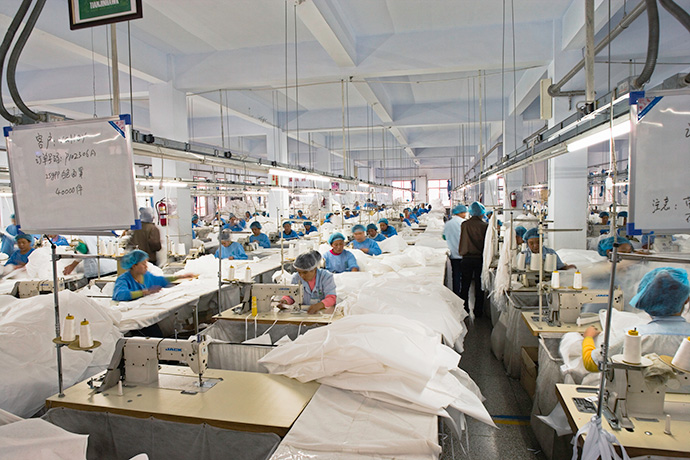
And not long after that, I was sitting in a cafeteria in Guangdong listening to a young Chinese assembly worker talk with pride about the products she was helping send to America. “My parents never had a job like this,” she said, before her beleaguered eyes betrayed her real feelings about the long hours and strict working conditions at her factory.
Three people, three places, three stories, all connected by the same global machine. One person was displaced by circumstances beyond their control. One person was delighted by a perk they take for granted. One person was lifted by opportunity into a new life, but at a steep personal cost.
Global convenience has always had a human impact. We just rarely see all sides.
The Irony of Global Convenience
For decades, outsourced manufacturing delivered exactly what American families wanted: cheaper goods, more variety, and faster innovation.
It made electronics affordable. It put flat-screen TVs in most American living rooms. It filled closets and garages at prices previous generations would have found unimaginable.
But the same forces that brought convenience also hollowed out manufacturing towns, shuttered industrial hubs, and fractured communities built around union halls and shift schedules.
And in many cases, the same American who celebrated the discount store savings was the same American who lost a job because of them. Globalization delivered convenience. But not without casualties.
Outsourcing Moved Factories and Shifted Awareness
Forty years ago, Americans lived near the things they bought and consumed. You knew someone who worked at the steel mill. You heard the hum of the local assembly plant. You could picture how a product was made. You felt connected to the chain of work that supported families in your community.
Today, most of that has moved offshore, and with it, our understanding.
Consumers experience the final product, not the labor that created it. Factories are now abstractions, rather than neighbors. We’ve created a world where goods appear on shelves “magically,” untouched by human hands—at least in our imagination.
Along with production, outsourcing relocated responsibility and visibility.
China’s Industrial Ascent Had a Human Story, Too
It’s easy to frame globalization as America’s loss and China’s gain. But the reality is more human and more balanced than we admit.
I’ve met workers in China whose grandparents survived famine and whose parents lived in rural poverty. To them, a factory job with stable hours and predictable pay was not exploitation, but rather a means of upward mobility.
- Engineers are proud to meet Western quality standards
- Managers are determined to build something of world-class quality.
- Workers can send money home to educate siblings and children
Globalization lifted millions of Chinese families into the middle class. It created unimagined opportunity for people who had been shut out of global markets for generations. This doesn’t erase what America lost. However, it complicates the story, and that’s exactly what it should do.
The Fallout at Home: What America Lost
The cost of global convenience was not evenly distributed. If you’re from an old Rust Belt town that used to run on coal and steel, you know what I mean. As American companies offshored manufacturing and supply chains, they made calculated decisions that caused irreparable harm to the communities that built them.
1. The collapse of industrial identity
Manufacturing towns lost more than jobs. They lost purpose, rhythm, and pride.
2. Skills eroded across generations
Entire technical capabilities faded as supply chains moved offshore.
3. Social fabric frayed
When factories closed, the effects rippled across schools, churches, small businesses, and families.
4. Politics polarized
Economic displacement fueled resentment that shaped national elections and cultural narratives.
None of this was part of some devious Chinese strategy. These were unintended consequences of the choices made by American leaders, corporations, and consumers in boardrooms, Washington, and at the checkout counter.
We Benefited, and We Paid the Price
It’s tempting to frame China’s rise as a simple story of theft or betrayal. However, the truth is far more uncomfortable yet also more helpful: outsourcing has made life easier for consumers, created enormous value for corporations, displaced millions of American workers, and lifted millions of Chinese workers out of poverty.
Like life, this story happens in the gray. There is no villain that fits the narrative cleanly. There’s no hero to anoint or turn to for saving.
Instead, we have what we’ve always had: people, systems, incentives, and consequences.
Globalization didn’t betray us. It confronted us with the cost of our own preferences.
What We Do With This Truth Now
In my estimation, here’s a constructive path forward:
Rebuild domestic capability where it matters most.
Revitalizing coal mines or refiring steel mills isn’t on the horizon, but American manufacturing can rebuild capacity in response to modern demands, such as data centers or semiconductors.
Design global supply chains with humans in mind.
Recognizing that globalization really means that we’re all in this together, we should prioritize transparency, labor standards, and incentives that promote dignity.
Understand both sides of the story.
American displacement and Chinese uplift are part of the same equation, but American revitalization and Chinese competitiveness do not need to be adversarial or mutually exclusive undertakings.
Consume with awareness
You don’t need to carry around guilt as a consumer. However, a mindful awareness of the hidden chain of hands behind every product can help you make more conscientious decisions that reinforce the kind of world you want to live in.
Remember the People Inside the System
I’ve walked factory floors in Ohio, Guangdong, Taipei, and Kuala Lumpur. I’ve listened to workers on both sides of the Pacific describe their hopes, fears, and ambitions. And one truth always comes through: Globalization is a story about people. It’s about people who make, people who lose, people who buy, and people who build.
With that in mind, let’s create a future where convenience doesn’t require blindness and where prosperity doesn’t come at the cost of forgetting the humans inside the system.