
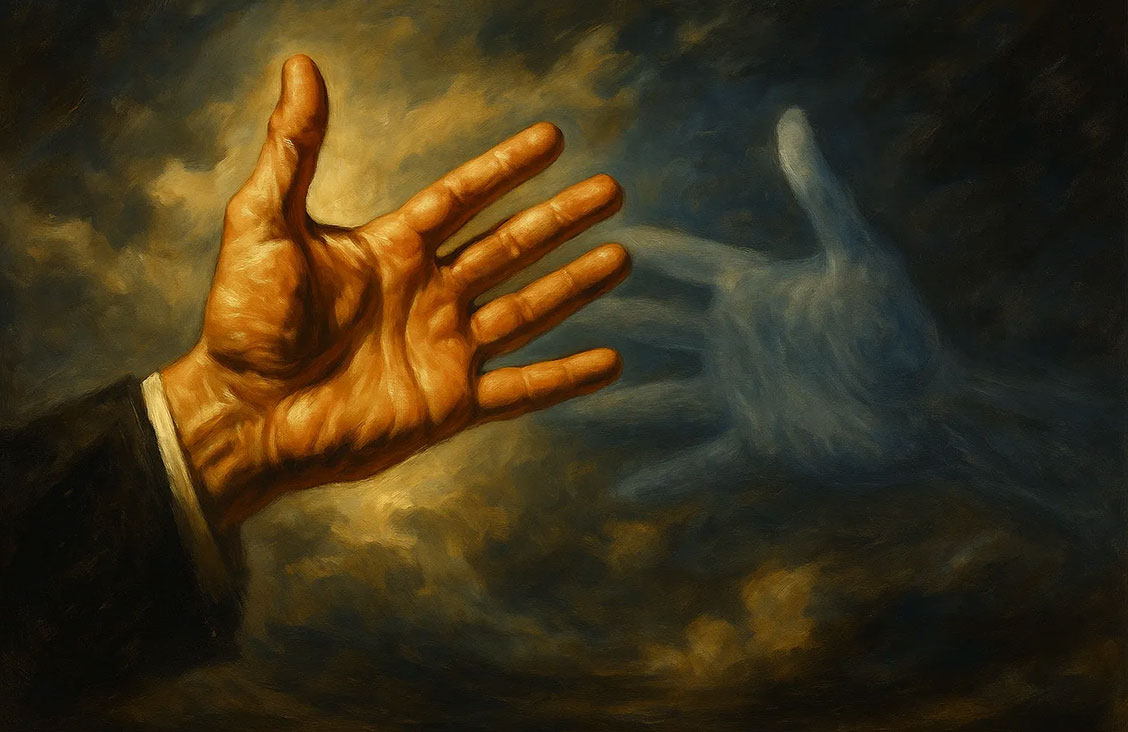
When Xi Jinping says “the East is rising and the West is declining,” he isn’t speaking rhetorically. He’s describing what most of China now believes. Across dinner tables, university seminars, and factory floors, that line has become a kind of mantra: proof that history has finally shifted eastward after two centuries of humiliation and catch-up.
The Economist recently called China’s industrial gamble—its trillion-dollar surge into EVs, chips, and green tech—”a Hong Kong-sized bet that the West really is in decline.” You can feel that confidence pulsing through Beijing’s planning commissions and provincial budgets. The conviction that the Western order is past its peak is no longer a fringe idea in China: it’s policy.
The question is: are they right?
The Visible Hand vs. the Invisible One
At the core of this debate lies a philosophical divide far older than either superpower rivalry or the WTO. It’s a difference in how civilizations handle uncertainty.
For America, progress has always depended on what Adam Smith called the “invisible hand”—the idea that when individuals pursue their own interests within a framework of rules, collective prosperity emerges without anyone planning it. Markets discover prices, entrepreneurs discover opportunities, and societies discover progress through millions of uncoordinated acts.
The invisible hand works because it’s invisible. It doesn’t need to see the future; it adapts to it through trial and error.
China, by contrast, has never trusted what it cannot direct. Its rulers—from emperors to Party secretaries—believe stability and virtue must be maintained through visible, coordinated order. The state’s legitimacy has always rested on its ability to foresee danger and deliver harmony.
That logic carries forward today. As economist Lan Xiaohuan of the China Europe International Business School writes in How China Works (2024):
“China does not believe in the invisible hand because the goals of the hand are invisible.”
That single line captures a civilizational gulf. Where Americans trust uncertainty, Chinese leaders fear it. Where the U.S. builds systems that adapt to failure, China builds systems designed to prevent it.
In Beijing’s view, the invisible hand is reckless. A society that doesn’t know where it’s going has lost its way. The state’s job is to ensure not only growth, but dignity, discipline, and order. The result is an economy guided less by markets than by moral choreography—what Xi Jinping calls “common prosperity.”

Two Thinkers, Two Prognoses
No one captures this divide better than Nicholas Lardy and Lan Xiaohuan—two economists who see the same data and opposite destinies.
Lardy, a senior fellow at the Peterson Institute and one of America’s most respected China-watchers, sounds the alarm. In The State Strikes Back (2019), he argues that after three decades of liberalization, Beijing is re-tightening control. Credit once flowing to private entrepreneurs now funnels into state giants “for reasons of policy, not productivity.” Private investment is shrinking, productivity growth has stalled, and ideology has replaced pragmatism.
The numbers back him up. Between 2007 and 2018, state sector productivity growth was nearly zero while private firms grew around 3 percent annually. State-owned enterprises employ fewer workers but absorb most new loans. The invisible hand, Lardy warns, is being tied behind China’s back—and the slowdown that follows is self-inflicted.
Lan Xiaohuan reads those same numbers differently. To him, this isn’t regression but refinement: the rise of a “meta-market”—a system in which the Party doesn’t crush competition but coordinates it. China’s visible hand, in his telling, doesn’t replace capitalism but corrects its blind spots.
Lan points to real successes. China has built 45,000 kilometers of high-speed rail, more than the rest of the world combined. It dominates solar manufacturing, controlling roughly 80 percent of global capacity. It has lifted 800 million people out of poverty in four decades, an achievement no market democracy can match. These are triumphs of planning and persistence, not invisible luck.
Where Lardy sees distortion, Lan sees design. Where Lardy fears inefficiency, Lan sees fairness. To him, China’s state capitalism is simply the next stage in modern governance: an economy guided not by profit alone, but also by purpose.
When Certainty Meets Change
Both men are right—and that’s what makes the story fascinating. Lardy reminds us that economies stagnate when ideology overrides markets. Lan reminds us that pure markets don’t build highways, satellites, or social stability.
But here’s the problem with the visible hand: it can only guide what it can see.
The Ming court couldn’t see the Portuguese ships rounding Africa. The Soviet planners couldn’t see the microchip revolution coming. And modern Beijing risks the same blindness—trying to engineer tomorrow’s triumphs using today’s logic.
What happens when trillions invested in solar power meet a breakthrough in fusion energy? Or when tens of thousands of kilometers of high-speed rail face competition from autonomous flight? Central planning assumes the future can be known. The invisible hand assumes it can’t, and builds flexibility into the system instead.
That’s why America, for all its chaos, keeps inventing the future. Our strength is not foresight—it’s adaptation. We tolerate error. We forgive failure. We let markets test ideas we can’t predict.
When Google kills ten projects to birth one world-changer, that’s the invisible hand at work. When Elon Musk bankrupts himself three times before reinventing two industries, that’s the invisible hand too. It’s not moral; it’s experimental. And it’s precisely that moral humility—our willingness to be wrong—that keeps the system alive.
America’s Dangerous Imitation
Here’s what worries me: confronted with China’s visible hand, we’re starting to imitate it.
The CHIPS and Science Act, the Inflation Reduction Act, the Infrastructure Investment and Jobs Act—all mark the largest wave of U.S. industrial policy since World War II. Some of it is necessary. Some of it is smart. But behind the talk of “strategic resilience” lies a deeper fear: that free markets can no longer compete with planning.
If that’s true, then we’ve already lost.
America doesn’t win by out-planning China. We win by out-adapting it. Our greatest companies—Google, Amazon, Tesla, Moderna—didn’t come from five-year plans. They came from chaos: from tinkerers, immigrants, and misfits chasing ideas no one could model in a spreadsheet.
The moment we decide Washington must pick winners, we stop being America. We trade the invisible hand for a visible one—and lose the economic humility that built us.
Why I Still Back the Invisible Hand
I’ve spent thirty years in China’s trade ecosystem, working with factory owners in Suzhou, engineers in Shenzhen, and Party secretaries in provincial towns. And it is them—the economic periphery—whom I trust the most. I’ve watched time and again how the entrepreneurial spirit of the fringe keeps rescuing the center from its own rigidity.
Every dynasty in Chinese history has had its periphery: peasants who smuggled rice during the Ming, underground merchants in Qing Suzhou, the farmers who started growing their own plots despite it being against Communist law in the 1980s. These are the people who make China move forward when the moral center hesitates or is stuck. And every time, a pattern repeats: the center moralizes; the periphery improvises; the center takes credit.
There is no question the Chinese Center is impressive, and deserves kudus for what it has accomplished. But, I believe, they over estimate how far they can take that model. I’m certain China’s story doesn’t end in collapse, but I’m also certain today’s re-centralization will need rescuing in the near future from the same periphery that has saved it before. It’s a system forever oscillating between order and improvisation.
That’s why, despite my affection for China, its government, and its people, I still back the invisible hand. Because it admits what moral systems cannot: that the future is unknowable.
No government—East or West—can see over the horizon. And pretending otherwise can be fatal.
The East May Rise. But the Future Is Blind.
So, is the East rising and the West declining? In some ways, yes. China’s confidence is real. Its manufacturing scale, infrastructure, and education system are formidable. The West’s polarization and short-termism are embarrassing by comparison.
But confidence isn’t destiny. Every civilization that believed it could see the future eventually stumbled over what it couldn’t imagine.
The invisible hand—messy, inefficient, amoral—has one enduring advantage: it never stops searching. It allows for uncertainty, error, and renewal. It’s not a hand that points; it’s a hand that feels its way forward.
Xi Jinping may believe the East is rising. But history is a tide, not a staircase. And tides change.
As for me, after a lifetime bridging these two great civilizations, I still trust the hand that no one can see—because it’s the only one humble enough to survive what’s coming next.
⸻
(References: The Economist, “China’s Hong Kong-Sized Bet,” Feb 2025; Nicholas Lardy, The State Strikes Back (2019); Lan Xiaohuan, How China Works (2024); World Bank (2022); National Railway Administration of China (2023); U.S. Congress (2022).)