
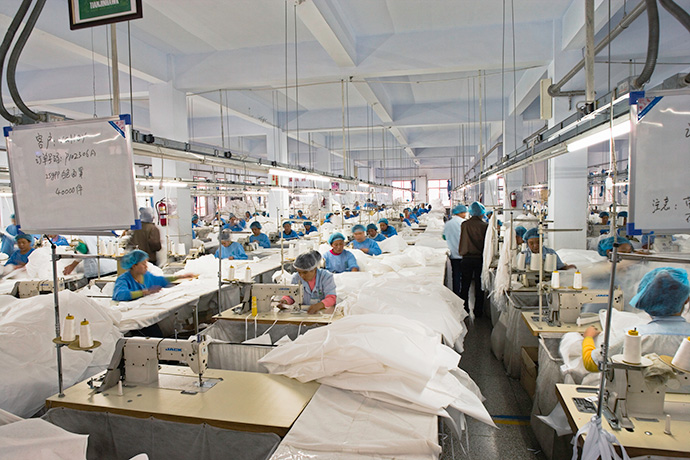
A few years ago, I hosted a U.S. executive in China for his first factory visit. As we drove through the industrial district, he grew quiet. Finally, he admitted, almost embarrassed, “I thought it would feel…different. I thought it would feel like the enemy.”
What he found instead were people. Engineers trying to solve problems. Managers juggling deadlines. Workers hustling to meet production targets. It was all disarmingly familiar.
No villains. No ideologues. Just partners in a complex global system we built together.
That moment captured something I’ve seen again and again:
America’s story about China’s manufacturing rise is emotional, not factual, and the myths harm us far more than they describe reality.
The narrative that comforts us also blinds us.
The Problem: Our China Story Is Emotionally Satisfying — and Strategically Useless
The dominant U.S. narrative goes something like this:
China stole our jobs, cheated the system, manipulated globalization, and has to this day, outsmarted a trusting America.
It’s a simple story, which is precisely why it’s so popular. It gives shape to frustration. It offers a villain. It rejects self-examination.
It is the wrong story.
China didn’t rise because America was naïve. China rose because the system we designed rewarded exactly the behaviors China executed exceptionally well.
Why the Myth Persists: The Emotional Roots
When I talk with American executives or policymakers about China, the conversation often circles back to emotion before it reaches economics.
1. Loss
America lost manufacturing towns, identities, and pride. That pain demands a culprit.
2. Nostalgia
We long for an era when American factories were the beating heart of global industry.
3. Fear
China’s scale is intimidating. Its speed is unparalleled. Fear becomes certainty: “This must be a threat.”
4. Projection
We assume China thinks and acts as we would: politically, competitively, strategically. But Chinese factory owners spend far more time thinking about their processes and supply chains than ours.
The myth reflects our anxieties more than it reflects China’s realities.
A Binary Lens Becomes a Caricature
Layered on top of emotion is an ideological scaffolding that distorts our understanding of reality.
Cold War Reflexes
We default to “us vs. them,” even when the incentives are economic, not ideological.
Moral Narratives
We often equate economic success with moral virtue, so China’s rise must, in this framing, be “unfair,” lest we cede some nebulous moral high ground to them.
Media Incentives
Nuances like the kind of intricacies we’re parsing here don’t go viral. Outrage, on the other hand, can fuel entire ideological movements without a shred of fact.
Corporate Amnesia
Companies that pursued China relentlessly now downplay their own role, preferring a villain narrative to a look in the mirror.
In thirty years of work across Asia, I have yet to meet a Chinese factory owner who fits the Washington caricature. They are pragmatic, ambitious, hungry, and hardly the ideological masterminds our myth imagines.
What Reality Actually Looks Like
Here’s the truth that rarely makes headlines:
1. China didn’t trick American manufacturers; American manufacturers sought China out.
The incentives were obvious. American companies enjoyed reduced costs, broader scale, heightened efficiency, and peerless speed. For their part, Chinese companies and workers finally got their piece of the global economic pie.
2. China didn’t steal capability; it built capability.
They often achieved this capability with direct help from U.S. companies, engineers, and training programs.
3. China didn’t rise in isolation. It rose because global demand pulled it upward.
American companies needed to drive wider and wider margins. That meant drastically lower prices. They got them from China, and American consumers rewarded them.
4. Chinese partners weren’t ideologues; they were problem-solvers.
When an American buyer said, “I need this cheaper,” the typical Chinese response was: “Give us time. We’ll figure it out.”
I’ve seen that determination in hundreds of workshops and boardrooms. It doesn’t fit the myth. But it fits reality.
The Cost of Believing the Myth
The villain narrative is harmful to American prosperity and to sustaining our global position. The cost for unreality is steep. Perpetuating the myth causes us to:
- Misdiagnose the causes of deindustrialization
- Overestimate China’s intent and underestimate its constraints
- Design reactive policies instead of strategic ones
- Cut off relationships we still depend on
- View interdependence as a failure rather than a fact.
The hardest truth is also the most useful: You cannot build a smart China strategy on top of a broken China story.
A Better Way Forward: The Reality Reset
Here’s what leaders can do instead of reaching for simple villains:
Replace outrage with inquiry.
“What incentives shaped this outcome?” is a far better question than “Who cheated?”
Look at the full shared history.
Interdependence didn’t happen by accident. It happened because we pursued it.
Recognize projection when it appears.
Chinese manufacturers think in engineering and relational terms, not in Western political abstractions.
Study the system, not the story.
Follow the supply chains, the capital flows, the consumer pressures. They reveal what ideology hides.
Reality Helps Us Compete
The executive who expected to “feel the enemy” left China with a realization many Americans are still struggling toward: They’re not who we thought they were.
China’s rise is the story of two nations shaping each other through incentives, ambition, and opportunity. The idea that America is some hapless victim and China is a nefarious villain offers cold comfort when the rest of the world has caught up to reality.
We can’t change the past. But we can change how we understand it. And that understanding is the foundation for any strategy that will be strong enough for the next 40 years.